

Published by Rhythm of Life · The benefits, honestly assessed
Ask ten people what Pilates is good for and you may get ten different answers - flat stomachs, better posture, a stronger back, recovery from injury, calmer minds. The interesting thing is that they are all partly right. Pilates is a whole-body method, and because it trains strength, mobility, control and awareness at the same time, its benefits spread across many areas of health and daily life. In this article we look at what Pilates is genuinely good for, where the evidence is strongest, and who tends to gain the most.
The single thread running through everything below is control. Pilates does not just make muscles bigger; it teaches the nervous system to recruit the right muscles at the right time with the right amount of effort. That improved coordination is why the results so often show up in everyday movement - lifting a child, carrying shopping, sitting for hours - rather than only in the studio.
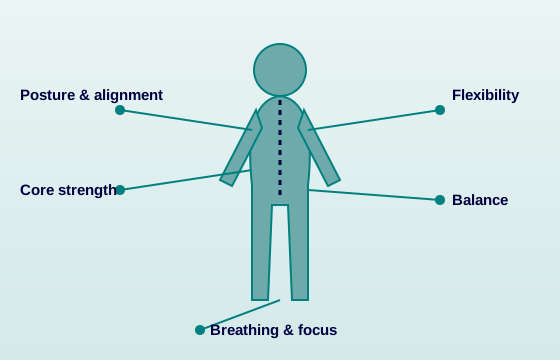
The table below summarises the areas Pilates is most often used to support, along with how it helps and the kind of person who may notice the biggest difference.
| Benefit | How Pilates helps | Who gains most |
|---|---|---|
| Core strength | Trains the deep abdominal and pelvic-floor muscles that stabilise the spine | Almost everyone, especially desk workers |
| Posture | Rebalances tight and weak muscles and improves spinal alignment | People who sit or stand for long hours |
| Back pain | Builds support around the spine and restores pain-free movement | Those with non-specific lower back pain |
| Flexibility & mobility | Lengthens muscles and opens stiff joints through controlled range | Stiff movers and older adults |
| Balance & coordination | Sharpens body awareness and the sense of where you are in space | Older adults and anyone prone to falls |
| Stress & wellbeing | Focused breathing and concentration calm the nervous system | Anyone under pressure or feeling tense |
Core strength and posture. Pilates is best known for the core, and for good reason. Modern life encourages us to slump, and weak deep muscles leave the spine poorly supported. By patiently waking up these muscles, Pilates helps the body stack itself more efficiently, which often eases the aches that come from poor alignment and makes people look and feel taller.
Back pain. For many people with persistent, non-specific lower back pain, gentle Pilates is one of the most useful forms of exercise. It does not force the back into painful ranges; instead it rebuilds confidence and support around the spine, so ordinary movement stops feeling fragile. As always, anyone with a specific diagnosis should check with a health professional first.
Rehabilitation. Because load can be dialled up or down so precisely - particularly on the reformer - Pilates is widely used in recovery from injury, surgery and childbirth. It offers a safe bridge between “resting” and “returning to full activity”.
Beyond the headline benefits, regular practitioners often report a collection of smaller but very welcome changes:
Like any form of exercise, Pilates rewards consistency and good coaching. To get the best results, keep these points in mind.
So, what is Pilates good for? In short, it is good for helping the body move the way it was designed to - strong, supple, balanced and aware. At Rhythm of Life, Kat tailors the work to each person's needs, weaving in somatic education and fascial release so the benefits reach into everyday life. If you would like to find out what Pilates could do for your body in particular, get in touch and start a conversation.